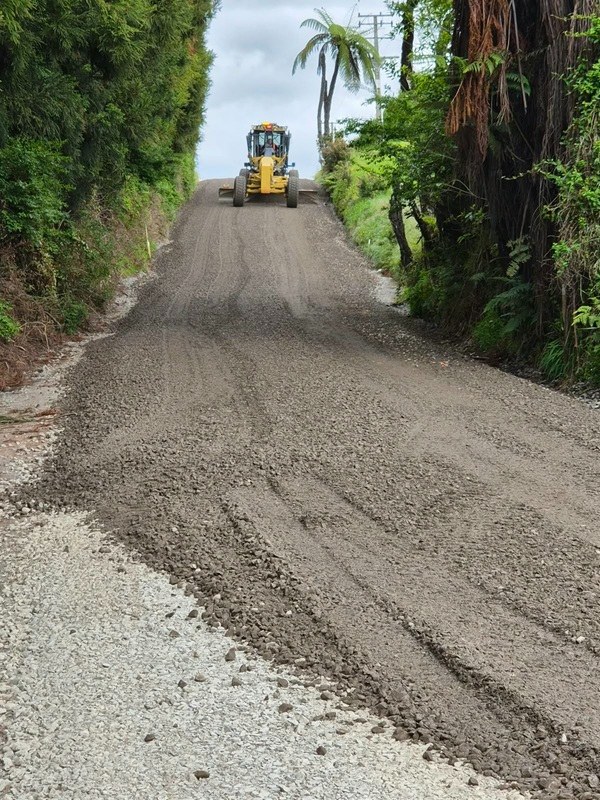
Warmer days and daylight savings signal the start of our busy 2026/27 road resurfacing programme.
We’ll be resurfacing more than 30km of road with chipseal across the District between now and April 2027, as part of our commitment to delivering safe, reliable, fit-for-purpose local roads for our communities.
As well as resurfacing, we will also be sealing some sections of road for the first time as part of our seal extension programme.
Western Bay Team Lead Road Maintenance Aidan Glynn says weather conditions are important, with spring and summer the best times of year for road resurfacing.
“We carefully plan our work to make the most of the warmer, drier weather and longer daylight hours, which helps the new seal bond to the existing road surface properly and gives it the best chance of lasting for many years.
"During the peak summer months, we do our best to balance doing the work during school holiday periods, when the roads are quieter at peak times, whilst also doing what we can to minimise the impact for road users during the busy holiday period.”
Heavy vehicles and moisture are two major causes of road damage. Therefore, one of the most important things we can do is protect the surface of the road, says Aiden.
He likens a road seal to paint on your house.
“Paint on a wooden house helps keep water out and protects what’s underneath. In this case, it’s the road underneath. Over time, the seal wears down and becomes less effective.
“The average life of a road surface is 10 to 12 years, depending on traffic volume, so we aim to resurface roads before the surface starts to deteriorate, which also helps prevent the need for major reconstruction.”
Seal extension programme
We’re responsible for 1077km of local road across our District, of which 150km (approximately 14%), is unsealed.
We’re currently working to seal McMeeking Road in Te Puke leading to Te Matai Marae, and a 2km section of Work Road in Aongatete.
As well as providing a smoother road surface and reducing dust, sealing these roads will also mean they’re easier to maintain, and will improve drainage so the road is more resilient to heavy rain.
Western Bay Director Transportation Calum McLean says it costs on average around $750,000 per kilometre to construct a seal extension on low volume rural roads.
“We’d love to seal them all, however we must prioritise which unsealed roads we fund, and when. Each unsealed road is assessed on the volume of traffic using the road and the dust exposure to residents living on the road.”
Please take care when travelling through the road works. Traffic management will be in place including stop/go and temporary speed limits. Slowing down through work sites helps keep everyone safe and reduces dust.
You can report any concerns via the Antenno app, by ringing us, filling in our online form or emailing info@westernbay.govt.nz
Ends.